Accessible Composting Guide for Limited Mobility
By Mateo Silva • 24th Apr
An accessible composting guide starts with one principle: your setup should fit your body and lifestyle, not the other way around. Whether you're managing limited mobility, chronic pain, reduced strength, or simply want ergonomic compost solutions that don't demand extra strain, the right method and compost bin for physical limitations can transform composting from a burden into a small, quiet win. This guide walks you through selecting and maintaining a setup that works within your constraints (and keeps you compliant with local rules).
Why Accessibility Changes the Composting Equation
Most composting advice assumes you can bend, lift, carry, and turn. For many households, that assumption breaks down fast. No-bending composting isn't a luxury; it's the difference between a system that lasts and one that gets abandoned after a month.
Here's the risk: when a setup requires uncomfortable reaching or lifting, two things happen. First, maintenance gets skipped: turning the pile, adding browns, checking moisture. Second, as moisture builds and greens dominate, odors spike and pests arrive. I once saw an HOA issue a nuisance odor complaint after a member installed a tumbler they couldn't safely rotate. The fix wasn't a new bin, it was switching to sealed tumblers with ground anchoring and a carbon top-off protocol that kept a neighbor from ever smelling a problem. Compliance first, then convenience (no fines, no raccoon headlines).
The goal is to build a system robust enough to tolerate some neglect and ergonomic enough that you'll actually use it.
Matching Your Method to Your Body and Space
Not all composting methods demand the same physical effort. The right choice depends on your mobility, available space, and local rules.
Sealed Tumblers and Rotating Bins
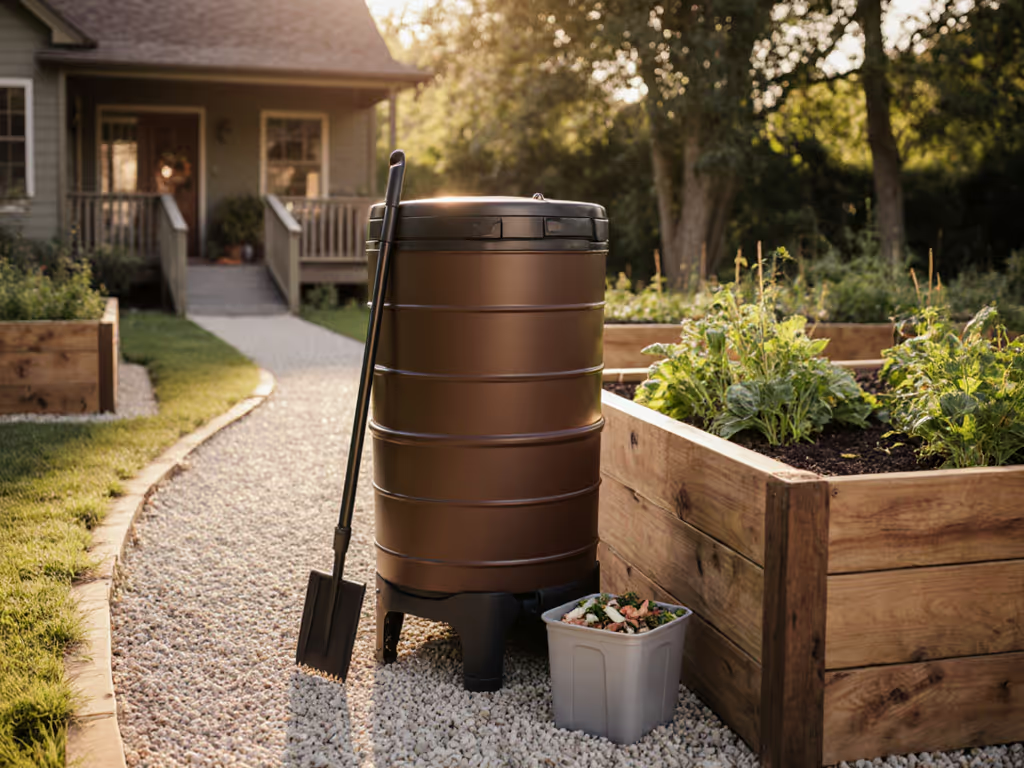
Sealed tumblers are popular for good reason: they're rodent-proof, weatherproof, and require no bending to access. The catch is rotation. If you can't comfortably turn a handle or spin a barrel, this method creates a maintenance wall. Look instead for low-effort compost maintenance features: models on stands with handles at waist height, lighter capacities (25-50 gallons rather than 100+), or designs where you can tip or roll the bin rather than spin it. Ground anchoring prevents tipping and keeps critters out. If turning is a concern, see our rolling composters comparison for low-effort options that move instead of spin.
Stationary Bins (No Turning Required)
Many disability-friendly compost systems skip turning altogether. You layer browns and greens as described below, then let decomposition happen without agitation. This works well if you can access the bin to add materials and empty finished compost (ideally without kneeling or heavy lifting). Stationary bins constructed from wire, wood, or cinder blocks cost less and suit renters and homeowners alike. For zero-bending setups, explore our disability-friendly bucket compost bin guide.
Vermicomposting (Worm Composting)
Worm bins sit indoors or on a balcony and require minimal physical effort. You add scraps to the top layer, and worms do the work below. No turning. No bending to a distant pile. The tradeoff: you're managing a living system and maintaining specific moisture and temperature. Start small (a single bin) before scaling.
Community or Municipal Pickup
If physical setup or maintenance feels overwhelming, community composting and curbside pickup programs collect your food scraps or offer a designated drop-off location. You store scraps indoors (in a freezer-safe container to avoid odor and insects), then hand them off at a scheduled time. This outsources decomposition entirely and is often the most accessible option for renters or those with very limited mobility.
Step-by-Step Setup for Reduced Strain
1. Choose Your Location
Select a spot you can reach safely year-round. If using a stationary bin or tumbler, place it on level ground with good drainage, and ensure there's a water source nearby. Avoid placing it directly against a fence, since you'll need access on all sides. A dry, shady area works best, though compost breaks down in sun or shade. For detailed placement tips on sun, drainage, and airflow, see our science-driven bin placement guide.
2. Set Up Your Bin
Bin height matters. A bin that requires you to kneel, crouch, or reach above shoulder height will be skipped. If possible, use a bin on a stand or elevate it 6-12 inches off the ground using a wood pallet. This reduces bending and allows air circulation underneath.
Bin size and weight: Smaller bins (around 3×3×3 feet) are easier to manage than industrial-scale piles. If you're buying a pre-made tumbler, consider a 25-40 gallon capacity rather than 80+, so it's lighter to rotate or roll. Pre-assembled models save the strain of DIY construction.
3. Layer Your Materials
Start with a foundation of dry, coarse material (twigs, wood chips, or straw) to elevate the pile and let air flow underneath.
Then, layer browns and greens like lasagna:
- Browns (carbon-rich): fall leaves, shredded paper, cardboard, straw, wood chips, dried grass. These should make up two to three times the volume of greens.
- Greens (nitrogen-rich): vegetable and fruit scraps, coffee grounds, crushed eggshells, fresh grass clippings, tea bags (no staples).
Chop or shred materials before adding (smaller pieces decompose faster and require less mixing).
Always cover food scraps with a 4-8 inch layer of dry leaves or browns to avoid nuisance conditions: odors, insects, and pest interest. This single step prevents most problems.
4. Monitor Moisture
Add water as needed to keep the pile moist (like a wrung-out sponge, not soggy). If rain is heavy, drain excess or cover the bin temporarily. If it's dry, add a light spray weekly. You don't have to turn the pile, but if you can (even once a month), it speeds decomposition.
Managing Kitchen Scraps Without the Strain
Storing scraps indoors without odor and flies is key to staying consistent. Keep a small, sealed countertop compost container (freezer-safe plastic or stainless steel) in your kitchen or freezer. Frozen scraps won't rot, attract gnats, or smell, and they're easy to carry to your bin (no bulk, no heaviness).
When the container is full, make one trip to the bin, dump the scraps, and cover them with browns. Frozen scraps thaw during decomposition; no special handling needed.
What Can and Can't Go In
Safe to compost at home: fruits, vegetables, coffee grounds, egg shells, crushed paper, leaves, yard trimmings, dead houseplants (non-diseased), and tea leaves.
Skip these: meat, dairy, oils, and diseased plants (they invite pests and odors).
If you use a municipal composting service or drop-off program: you can often compost meat, dairy, bones, oils, cardboard, paper towel rolls, pizza boxes, bamboo skewers, and certified compostable plastics and cutlery.
Check your local program's guidelines before assuming what's accepted.
Before You Start: Check Local Rules
This is non-negotiable. Some municipalities ban backyard composting entirely. Some HOAs restrict bin type, size, or location. Some regions require bear-resistant containers. Compliance and neighbor trust are the foundation of effortless, long-term composting. A quick call to your city waste department or HOA clarifies what's allowed and what specific safety measures (like sealed bins or ground anchoring) are mandatory. Skipping this step risks a fine or an order to remove your bin.
Moving Forward
Accessible composting isn't about doing everything perfectly. It's about choosing a method that fits your body, your space, and your local rules, then sticking with it. Start with a single small bin or a trial run of community pickup. If it works after a month, you can scale or adjust. If it doesn't, pivot. The best system is the one you'll actually maintain.
Reach out to your local waste authority, municipal composting program, or community garden for region-specific guidance and resources. Many offer rebates, free bins, or local sourcing of browns like shredded leaves. Most important: pick a setup that doesn't ask your body to do more than it can. That's when composting becomes effortless, and when you'll actually see results.
Related Articles