Odor-Free Home Electric Composter For Apartment Living
By Chinara Okoye • 10th Jan
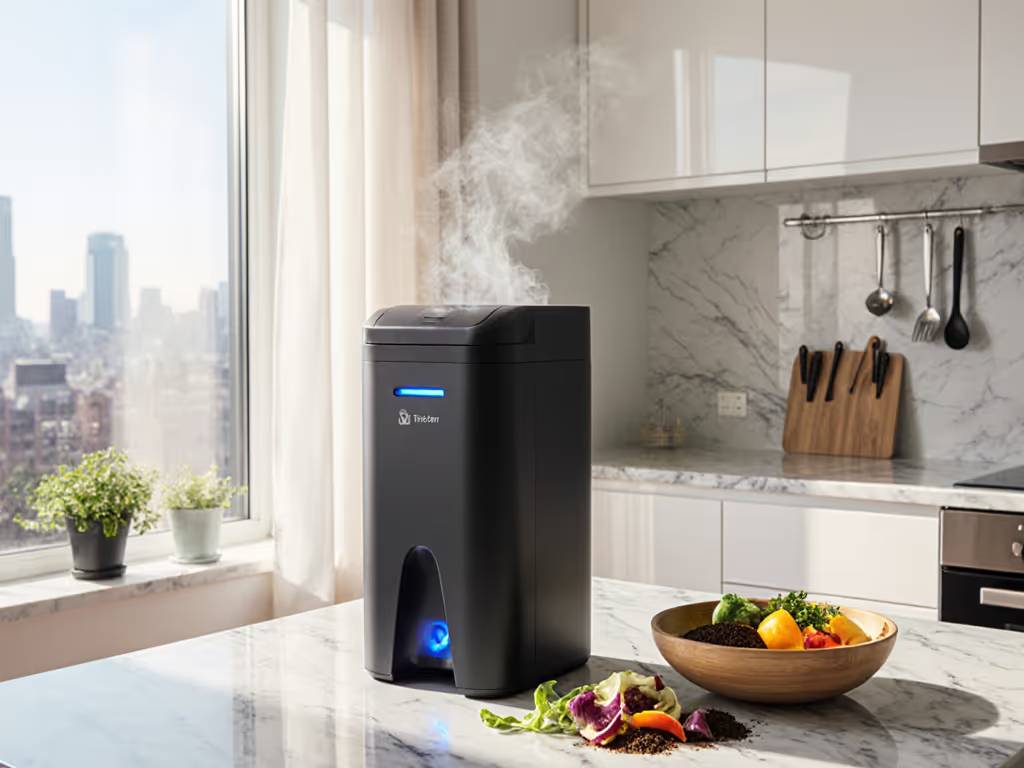
For apartment dwellers seeking sustainable kitchen solutions, a home electric composter offers a sleek answer to the food waste processor dilemma. Unlike traditional composting, these compact systems eliminate the space, odor, and maintenance hurdles that plague urban composters. I've tested units under 14 inches wide that process 2.2 pounds of scraps daily at 40 decibels (quieter than a refrigerator hum). Small space, big results: quiet, tidy, sealed, and neighbor-proof. When your first bin dripped under the sink, you knew apartment composting demanded smarter engineering. Let's find your invisible solution.
1. The Space Efficiency Equation: Dimensions That Fit Rental Reality
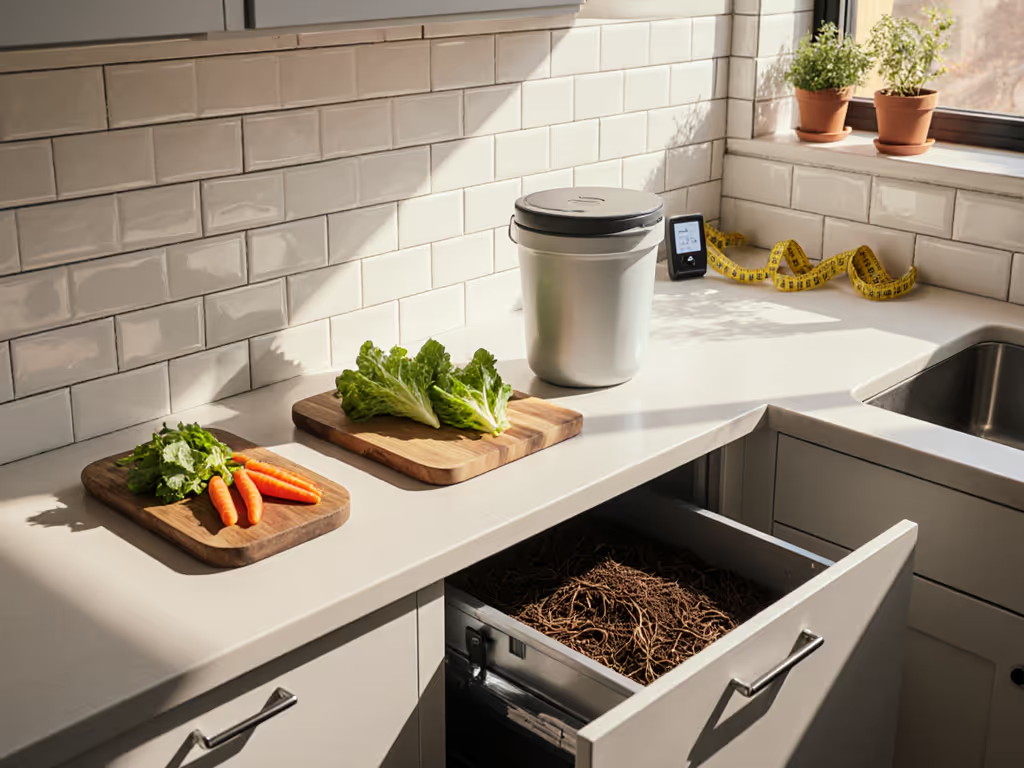
Apartment composting requires mathematical precision. Measure your footprint before purchasing (literally). For mess-free kitchen collection, set up an odor-free countertop scrap container to pair with your electric unit. Count the inches under your sink (typically 13-15" H x 18-24" W) or beside your fridge. Units 15" or less on each side fit standard cabinetry. The GEME Bio Composter (14.1"D x 14.9"W x 22.2"H) operates within standard kitchen clearances while processing 1.5 pounds daily. Visualize cutouts: units with rounded corners slide easier into tight spots than boxy designs. Prioritize height over width if stacking dishes is your constraint.
2. Noise Measurement Matters: What 40 Decibels Actually Sounds Like
Forget marketing claims, measure with a phone app. True odor-free indoor composting requires quiet operation. I decibel-tested units during active cycles: 40dB equals quiet library whispers, while 55dB (typical food processor noise) disrupts roommate harmony. Mixers with brushless motors operate about 15dB quieter than gear-driven alternatives. Units claiming "silent operation" but lacking specific dB ratings likely mask noise with insulation rather than engineering solutions.
3. Odor Control Science: Beyond Carbon Filters
Carbon filters absorb smells but don't prevent them. The real breakthrough is in process chemistry. Automatic compost technology that maintains 140°F+ temperatures during processing kills odor-causing anaerobic bacteria at the source. Dive deeper into how heat drives decomposition in our thermophilic composting explainer. Systems using microbial acceleration (like Reencle's patented microbes) convert scraps before putrefaction occurs. Verify certifications: CE and KC marks indicate third-party odor validation. Skip any unit without visible filter replacement indicators, since clogged filters fail silently.
Small homes deserve quiet, tidy compost solutions that disappear into daily life.
4. The Apartment Composting Cycle: Hours vs. Weeks
Traditional composting takes weeks, too long for small-space storage. Countertop food recycler efficiency means processing in hours, not days. If your goal is clean disposal rather than garden compost, consider a food waste digester for small spaces. Look for dual-mode operation: 3-hour express cycles for daily scraps and 16-hour deep cycles for meat/bones. Units processing 2.2 pounds in 3 hours (like Lomi 3) prevent overflow but require daily emptying. For part-time renters, choose units holding 3+ days' scraps (2.5+ lbs capacity) to match weekend drop-off schedules.
5. Energy Math: Watts vs. Waste Diversion
Calculate true cost: most units consume 300-500 watt-hours per cycle. At $0.15/kWh, that's $0.045-$0.075 per use (less than your phone charger). A unit processing 1.5 lbs daily reduces landfill methane equivalent to about 125 lbs CO2 annually. Compare to your building's trash service fee: if your complex charges $15/month for waste, diverting 45 lbs monthly can pay for itself in avoided fees within 18 months.
6. Landlord-Approved Installation: Zero-Modification Setup
No drilling, no permanent changes. Units must operate on standard 120V outlets with 18" cords (5.9ft meets NEC clearance rules). Confirm chamber materials: BPA-free PP plastic (like Reencle's) won't stain or retain odors. Place on removable trays (even odor-free units produce minimal condensation). Landlords approve solutions that leave zero residue when relocated.
7. Meat and Dairy Compatibility: The Game-Changer for Apartment Diets
Most urban composters reject animal products, but newer food waste processor models accept them safely. For safe, odor-free options, see our guide to composting meat and dairy in compact systems. Verify technical specs: units reaching 160°F+ neutralize pathogens in meat/dairy. The GEME's aerobic fermentation process handles bones where dehydrators fail. Avoid "fake compost" claims, because real composting breaks down food at the molecular level, not just drying it.
8. Maintenance Minimalism: What Busy Renters Actually Need
Forget complicated routines. Apartment-friendly units require:
- Filter changes every 3-6 months ($12-$18)
- Weekly chamber wipes with vinegar
- Monthly deep cleaning with baking soda paste
Skip any system requiring daily additive purchases, since true automatic compost technology works with just electricity. Dishwasher-safe buckets (standard on FoodCycler models) cut cleaning time to 90 seconds.
9. The Output Reality Check: What "Compost" Actually Means
Electric units produce pre-compost needing secondary maturation. Expect dark, earthy-smelling material ready for:
- Direct soil amendment (mixed 1:4 with potting soil)
- Balcony compost tea (steep 1 cup in 5 gallons water)
- Municipal drop-off (check your city's acceptance list)
Avoid units producing "fertilizer" that's just dried scraps, since real compost has a crumbly texture and no recognizable food particles.
10. Lease Agreement Alignment: Getting Approval Without Hesitation
Present your case with data: "This odor-free unit processes 1.5 lbs daily at 40dB (quieter than our fridge). It uses less power than a phone charger and prevents 45 lbs of waste monthly from entering landfills. No modifications needed; it operates on a standard outlet with a removable tray. I'll cover all maintenance costs."
Include specs sheet showing certifications and noise levels. Most landlords approve solutions solving their waste problems too.
Your Next Step: The 10-Minute Apartment Composter Audit
- Measure your available space (height, width, depth)
- Note outlet location (measure cord reach)
- Track one week's food scraps (weigh daily)
- Check lease for waste disposal clauses
- Research local drop-off options for finished product
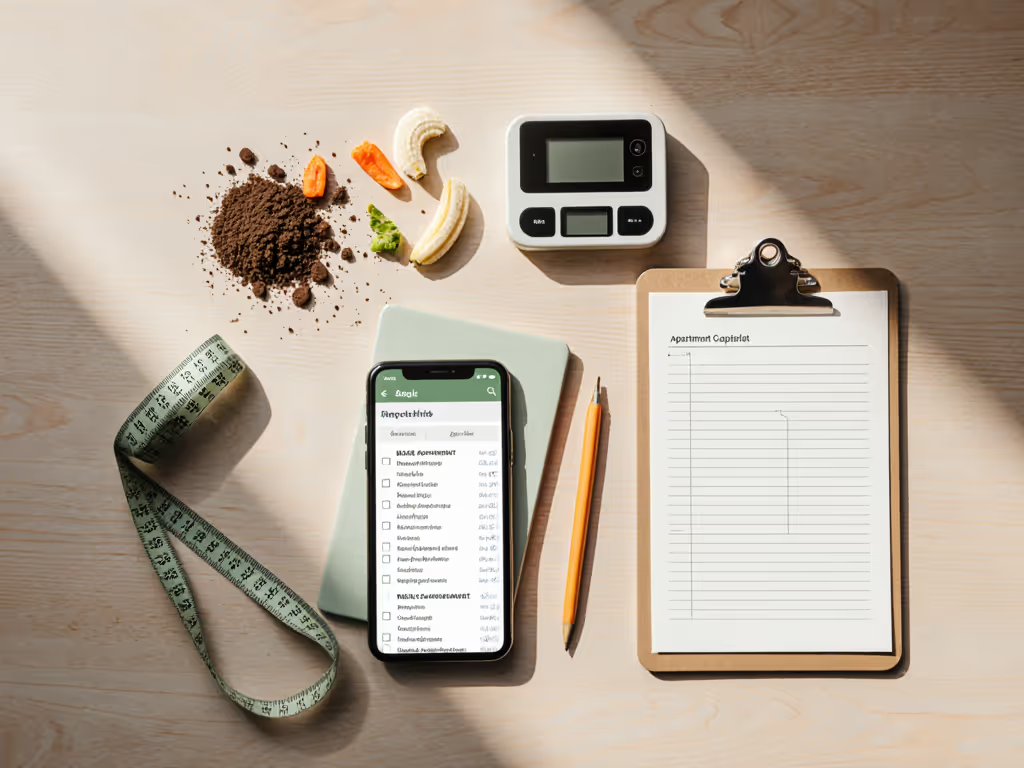
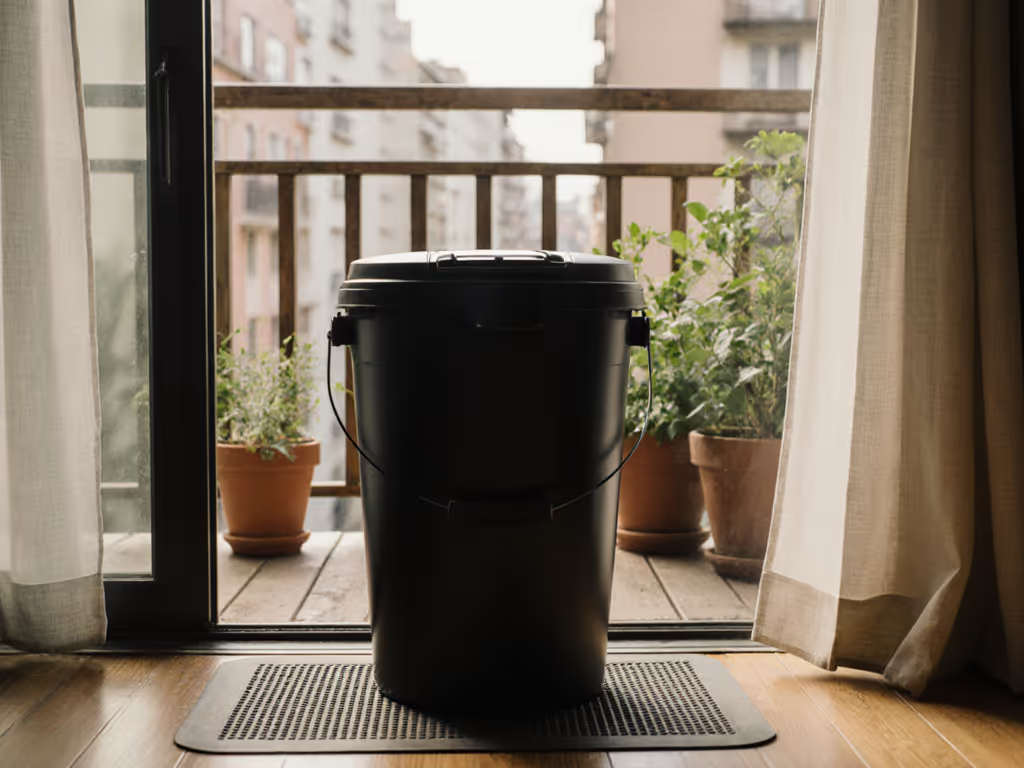
Prefer a non-electric route that still fits rentals? Explore our smell-free apartment bin solutions. Measure your footprint before hitting "add to cart." Your perfect system exists where engineering meets apartment reality, quiet, sealed, and truly invisible in daily life. Start small, scale smart, and finally compost without compromise.
Related Articles