
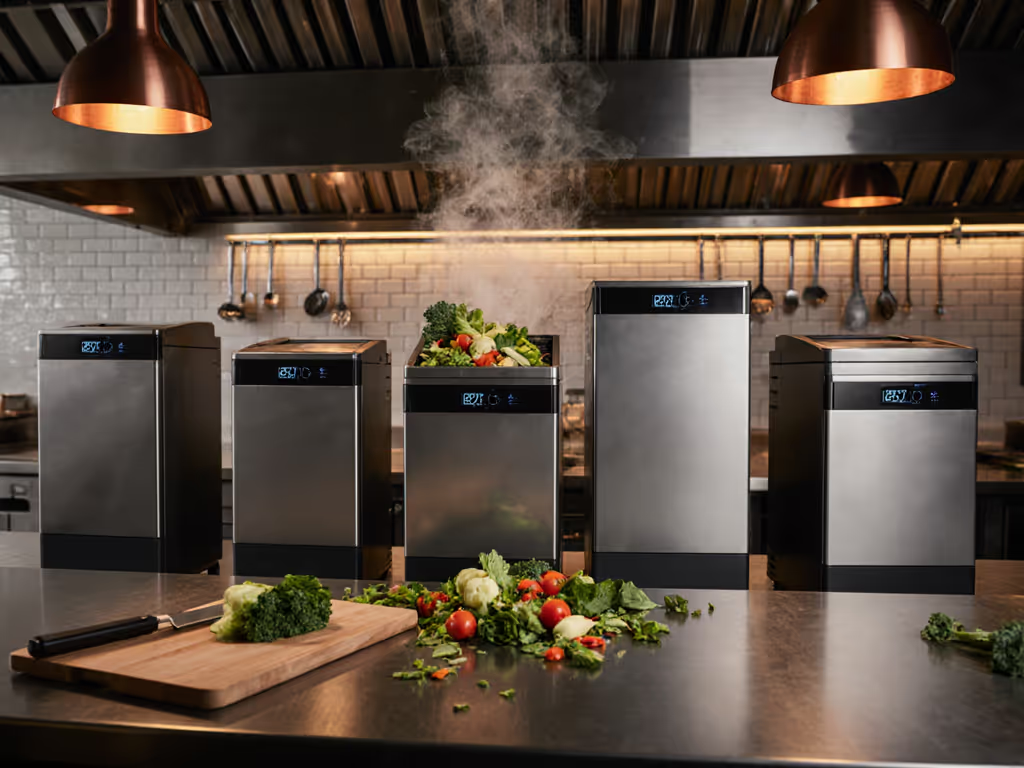
Build a School Composting Program That Yields Quality Soil
By Lucas Hoshino • 7th Feb
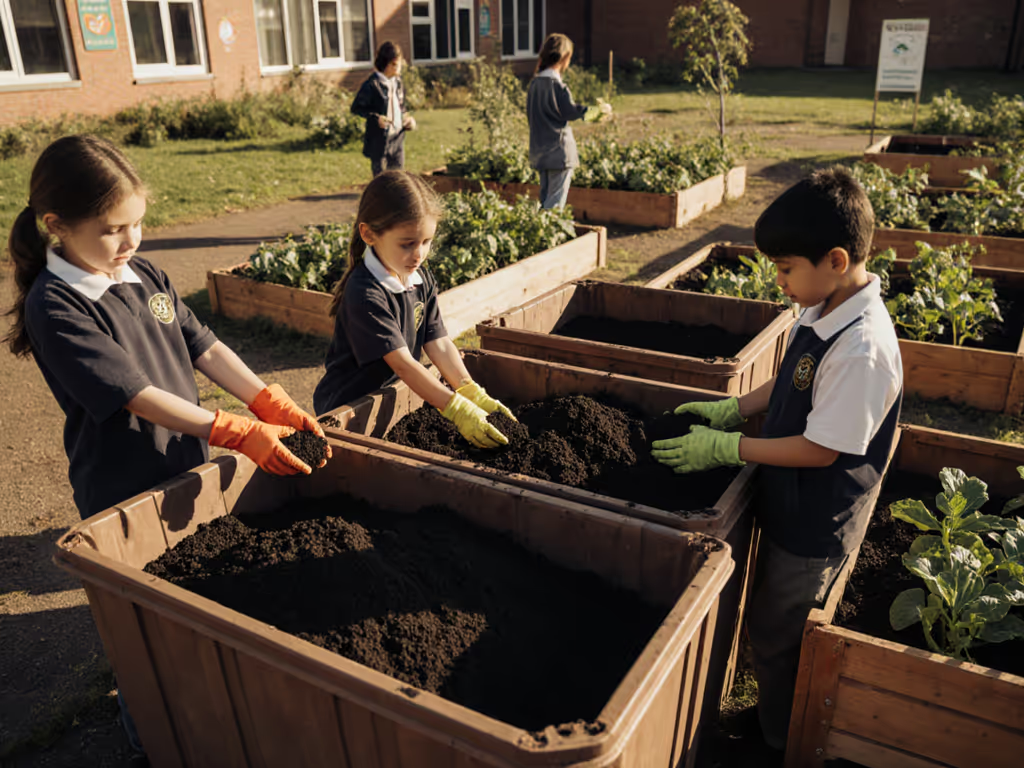
Let’s cut to the harvest: a successful school composting program shouldn’t just divert waste, it must deliver soil that visibly boosts plant health and student learning. Educational compost bins are merely vessels; the real win is measured in deeper roots, sweeter strawberries, and kids who see their lunch scraps become tomorrow's biology lesson. I learned this when my urban tomato bed doubled in yield after switching from a soggy heap to an aerated static bin (the bin itself wasn't special), but the clean, mature compost it produced transformed my soil. That's the north star for schools: if your compost isn't actively feeding plants, you're just managing waste. Below, I'll walk through how to build a system that works for your soil, not just your audit report.
Why Focus on Soil Health First?
Many schools launch composting to reduce landfill waste (a worthy goal!), but stop short of linking it to tangible garden results. This misstep turns composting into a chore, not a catalyst. Remember: compost is a soil input first; the bin is a means to that end. When students measure soil organic matter pre- and post-application using simple kits, they witness cause-and-effect: higher organic matter = less watering, fewer pests, and measurable yield jumps. At my urban school, we logged C:N ratios during curing and saw bean germination rates rise 40% with properly matured compost. That's when composting shifts from "eco-activity" to educational gold.
Sift once, smile twice, clean compost pays dividends in every seedling.
How do we avoid "rotten piles" that attract pests?
Pests thrive in anaerobic, overly wet compost, which happens when bins are undersized for scrap volume or lack airflow. Student compost education must prioritize aeration and carbon balance from day one. For cafeterias generating 5+ lbs of scraps daily:
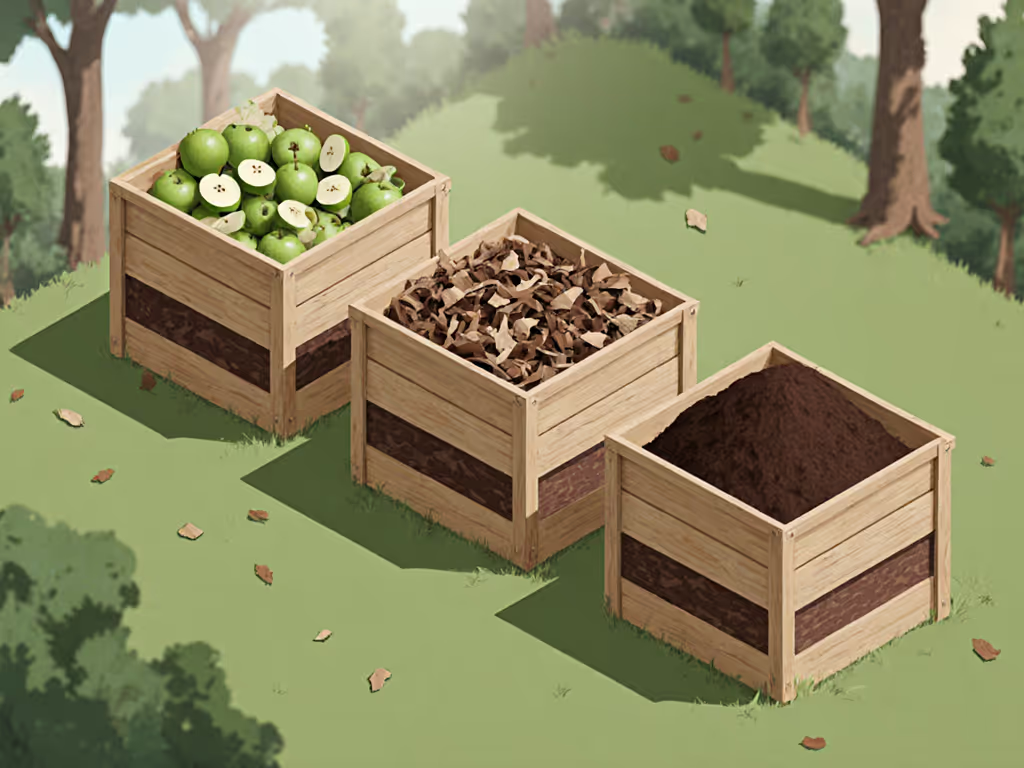
- Size bins correctly: Use a 3-bin system (1: active filling, 2: curing, 3: finished storage). Each bin should hold 1 week's scraps. Example: 50 lbs/week → 3 bins × 18 cubic feet each.
- Layer rigorously: Every 2" of food scraps gets 4" of shredded cardboard (cafeteria boxes!) or dried leaves. This absorbs moisture and invites oxygen.
- Monitor temperature: A drop below 110°F signals trouble. Students should record temps daily, it's instant data for science class. Equip student teams with the right tools using our compost thermometer comparison.
What's the simplest way to handle indoor scrap collection?
Classroom composting solutions need to be stink-proof and gnat-resistant to win teacher buy-in. Skip fancy countertop bins. If a classroom prefers a dedicated caddy, see our odor-free countertop compost containers for low-smell options. Instead:
- Use sealed 5-gallon buckets with gasket lids (like Gamma Seal lids). Line with compostable bags only if local rules require it, most schools skip bags by emptying buckets daily.
- Store scraps frozen. Yes, frozen! Cafeteria scraps go straight into labeled freezer bins. No odors, no fruit flies. Thawed scraps heat piles faster in winter.
- Designate "Compost Monitors" per grade. Daily weighing (recorded on a public chart) turns diversion into math curriculum. One Midwest school cut contamination by 75% by having monitors wear "Compost Captain" badges.
Evaluating Your Compost: Does It Work?
Many school programs celebrate "tons diverted" but never test if their compost actually nourishes plants. Don't fall for this trap. Quality compost should:
- Sift cleanly through 1/2" mesh (no slimy chunks or plastic glitter)
- Smell earthy, not sour or ammoniac
- Hold moisture like a damp sponge
Sift once, smile twice - this mantra separates garden-ready compost from landfill-bound sludge. If you're hand-sifting with a DIY frame (as I did), students quickly learn what maturity looks like. Contaminants? They're data points: "Why is there plastic here?" sparks better sorting habits. Post our what to compost guide at collection points to cut down on contamination.
How do we integrate this into academics without overloading teachers?
Curriculum-integrated composting thrives when it solves existing lesson gaps:
| Subject | Compost Activity | Real-World Output |
|---|---|---|
| Math | Track weekly scrap weights; calculate diversion rate | School waste audit report |
| Science | Test pH of finished compost; plant seeds in compost vs. soil | Germination rate charts |
| Art | Design "compost superhero" posters for collection points | Campus awareness campaign |
A Vermont school tied compost curing time to seasonal biology units, students correlated temperature data with microbial activity without hyping unverified claims. The result? Higher test scores on soil ecology and tomatoes that won the county fair.
Scaling for Long-Term Success
Will our compost actually feed the school garden compost systems?
Only if it's mature. Immature compost steals nitrogen from plants, killing seedlings. Cure compost for 4+ weeks after thermophilic temps drop. Here's how schools verify readiness:
- Bag test: Seal a cup of compost in a plastic bag for 24 hours. No ammonia smell? It's ready.
- Plant test: Grow radishes in pure compost. Thriving radishes = safe to use.
At my school, we amended garden beds with 1" of sifted compost. Roots grew 30% deeper within a month, that's the metric that convinced skeptical parents.
How do we maintain momentum when staff turnover happens?
Student compost education must outlive any single teacher. Embed roles into the school culture:
- "Compost Keeper" rotations: 5th graders train 4th graders annually
- Annual "Soil Festival": Test garden yields; share recipes using compost-grown produce
- Partner with facilities staff: Custodians manage bulking materials (shredded paper from offices is free carbon!)
One Oregon school saved $800/year by adjusting trash pickup schedules once diversion hit 35%. Those savings funded greenhouse repairs, proving composting pays.
The Bottom Line: Measure What Matters
A school composting program earns its place when soil health and student growth outpace the effort. If compost still smells like cafeteria leftovers after 8 weeks, your system is broken. If garden yields don't improve, you're not finishing the process. Start small: one bin, one garden bed, one measurable outcome. Track organic matter with basic kits. Share harvest photos, not just weight logs. And never forget:
Compost that feeds plants, not just the bin owner's ego, is the only kind worth making.
Further Exploration: Dive deeper into soil testing protocols with the Cornell Waste Management Institute's School Compost Handbook, or calculate your program's carbon impact using EPA's Waste Reduction Model (WARM). Your next harvest - and your students' curiosity - depend on it.
Related Articles
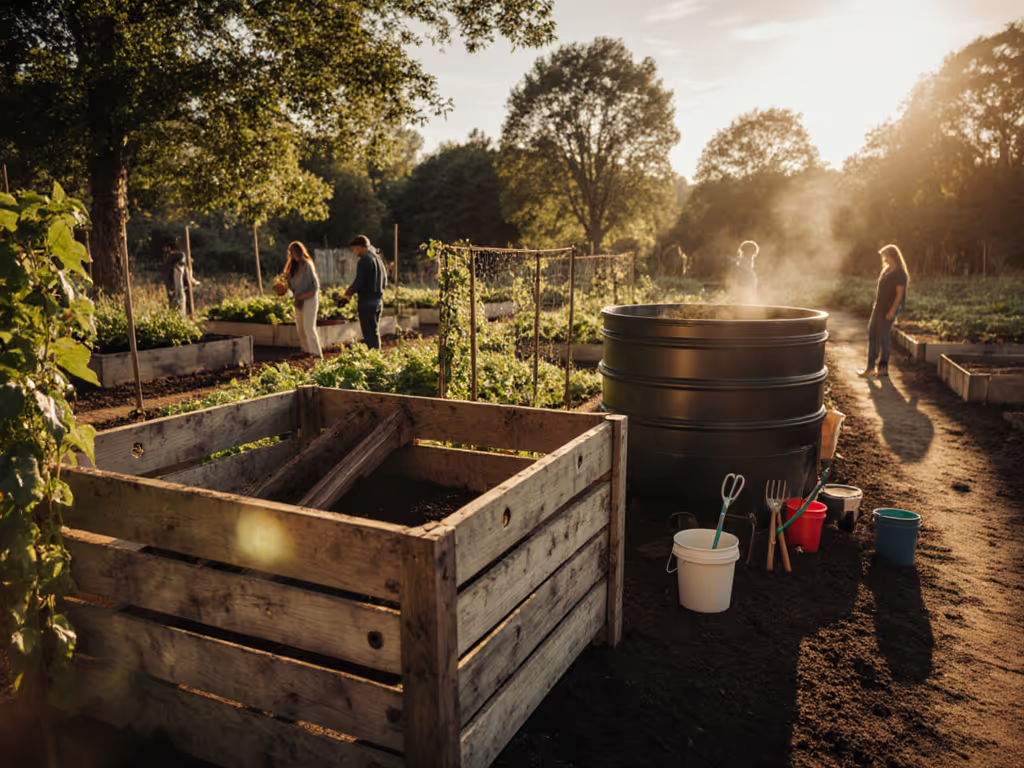
Restaurant Compost Systems: Proven Commercial Solutions
Use four measurable criteria - 120°F+ heat, waterproof seals, 40–60% moisture, and under 15 minutes daily - to evaluate commercial composters, then compare stress-tested options by volume, climate, and space. Get clear benchmarks for pest resistance, labor, and ROI to choose a system that turns high-volume food waste into stable, odor-controlled compost.
Community Composting Guide: Neighbor-Approved Setup
Launch a community compost program that passes local rules and wins neighbor support. Use regulatory checklists, context-based system choices, and simple odor/pest protocols - especially in the first 30 days - to keep it clean, compliant, and sustainable.